1996: Recognising the significance of mountain regions for global change research, the core projects BAHC, GCTE of the International Geosphere-Biosphere Programme (IGBP), together with START/SASCOM, organised a workshop in Kathmandu in 1996. At this workshop, the urgent demand for a comparative observation network in mountain ecosystems on a global scale was emphasised.
In 1997, an Austrian IGBP/GCTE research initiative, led by Prof. Grabherr, Institute of Ecology and Conservation Biology at the University of Vienna, developed a concept for such a network as a contribution to the IGBP Mountain Workplan. This concept was first presented at the European Conference on Environmental and Societal Change in Mountain Regions in Oxford, Dec. 1997. Two approaches, the Single-Mountain and the Multi-Summit approach were suggested in the concept. The first, suggested studies on various spatial scales on selected slope systems, including monitoring along transects and experimental components. The Multi-summit approach studying summit areas of different altitudes in a region, had a focus on the fundamental climatic gradients of vegetation and on biodiversity patterns.
In 1998 and 1999, a sampling design for the Multi-Summit approach was developed and tested in the field. This was supported by the Austrian Academy of Sciences from the national IGBP budget.
The priority was given to the Multi-Summit approach because it can be applied in a time- and cost-efficient manner, at a large number of sites, including remote areas.
In 1999, the Austrian Federal Ministry of Education, Science and Culture launched a feasibility study on how to extend the research initiative to a global observation network in alpine environments - GLORIA. In addition to this study, a call for contributions was made. Almost 100 experts expressed their particular interest in such a network.
In 2000, GLORIA was presented to an international auditorium at the First International Conference on Mountain Biodiversity in Rigi/Kaltbad, Switzerland, which was the launch event of the global mountain biodiversity assessment (GMBA) and the beginning of a co-operation between GLORIA and the GMBA.
In January 2001, GLORIA-Europe, a 5th RTD framework programme of the EU, started with 18 target regions in mountain areas of 13 European countries. This project was a contribution to the Global Terrestrial Observing System (GTOS) as a pilot study towards the world-wide implementation of GLORIA.
In autumn 2003, the final report of the successfully operation GLORIA-Europe project was submitted to the European Commission. A first continent-wide long-term monitoring network in alpine environments, based on a standardised and well-tested method, is established.
Autumn 2003: GLORIA contributes to two new projects of 6th RTD framework programme of the EU:
the 'Specific Support Action' GLOCHAMORE with interdisciplinary workshops on monitoring, modelling and process studies in mountain regions;
and the 'Integrated Project' ALARM focusing on large-scale modelling of environmental risks.
2004: The total number of GLORIA target region has shifted from the 18 GLORIA-Europe regions to 28 target regions, including six target regions outside of Europe (e.g., Montana, USA; Australia, New Zealand). This is the first step towards an active global network.
The idea of a network of GLORIA Master Sites (i.e. the initially planned Single Mountain approach) is being developed and the integration of existing research infrastructure is being explored.
2005: A co-operation with UNESCO-MaB resulted in the establishment of GLORIA target regions within Biosphere Reserves in Chile, Peru, and in the Russian Altai Mountains. This work was, further, supported by the Austrian Federal Agricultural and Environmental Ministry and by the Austrian Academy of Sciences through the national MaB budget.
In parallel, first target regions in SW-China were setup in a co-operation among local institutions in Yunnan, the Missouri Botanical Garden, and The Nature Conservancy.
2006: By end of 2006, the network consisted of 47 target regions and more than 50 research teams, distributed over 5 continents.
In North America, where observation sites were established in 8 regions, so far, the network was fostered through CIRMOUNT - a climate change network for U.S. and Canadian mountain researchers. Two GLORIA Master Sites were established:
(1) Mount Schrankogel, Tyrol, Austria, where GLORIA-related research dates back to 1994, and
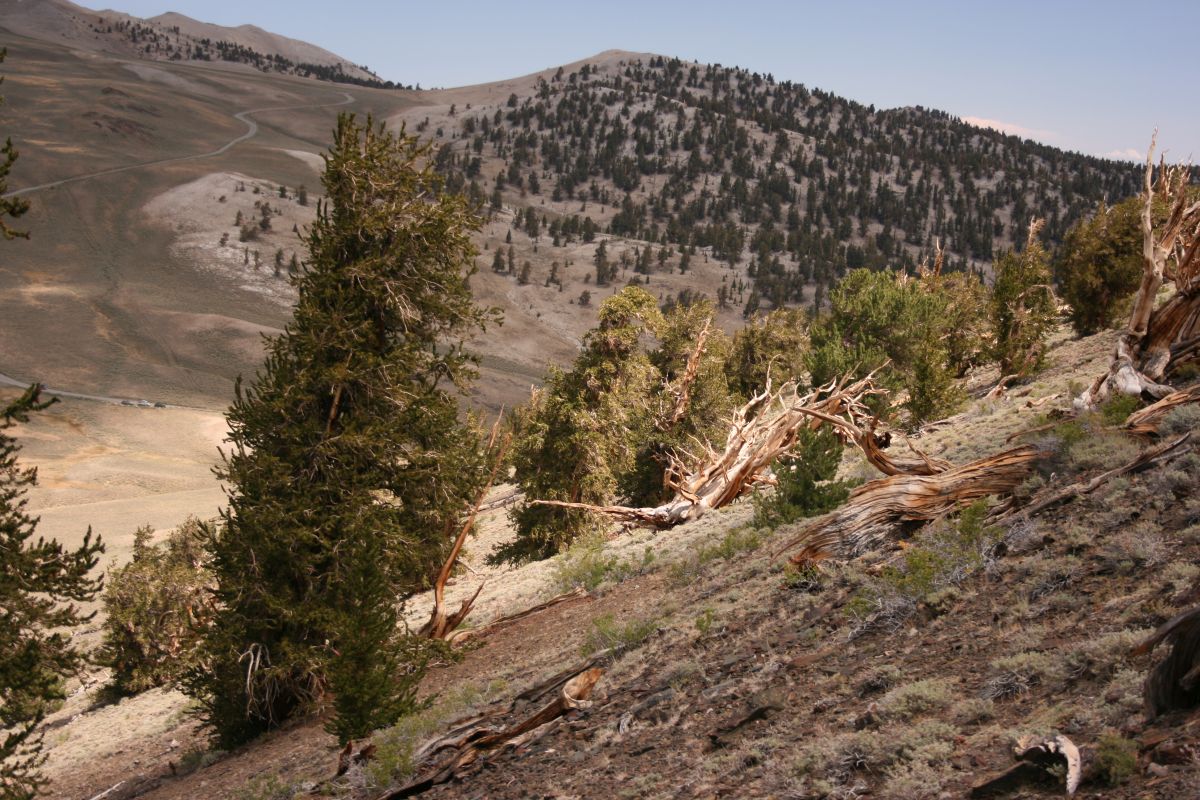
(2) White Mountains, California, USA, launched in summer 2006, based on existing facilities of the University of California.
In summer 2006, an international workshop was held in the north-eastern Alps, focusing on future monitoring activities. A Europe-wide re-investigation, supported by the Swiss MAVA foundation for Nature Conservation, is planned for 2008.